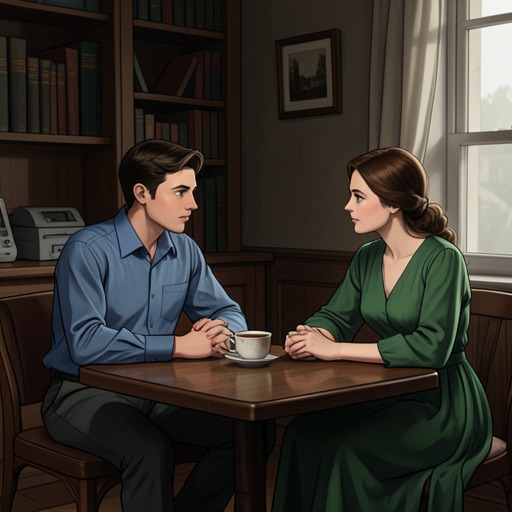
Mrs. Irving
Anne of AvonleaMrs. Irving is Paul Irving’s grandmother and the traditional-minded guardian who raises him after his mother’s death. Seen mostly through Paul’s accounts, she is at once generous and authoritative: she gives him a home and takes her responsibilities seriously, but her old-fashioned rules cannot replace the tenderness he associates with his mother. The contrast helps define Paul’s affection for her, his sense of duty, and the childhood losses he continues to carry.
Identity and Background
Mrs. Irving’s place in Paul’s life is shaped by a family arrangement split between care at home and a father often away on business. Paul explains that his father, Stephen Irving, believes a housekeeper is not suitable to raise a little boy, particularly when work keeps him from home. His grandmother is therefore the person bringing him up, a responsibility Paul recognizes and values. He ranks her close to his father in his affections, while also feeling that he ought to love her especially because she does so much for him.
The novel gives no independent account of Mrs. Irving’s past or private thoughts. Instead, her character takes shape through what Paul says about their daily life and through the narrator’s brief description of the methods by which she raises him. That limited perspective matters: readers encounter a real caregiver, but also a child’s interpretation of her rules, goodness, and place in a household marked by bereavement.
A Home of Rules and Care
The narrator describes Mrs. Irving as bringing Paul up according to old-fashioned standards of diet and morals, a reputation known throughout Avonlea. The most vivid example is breakfast porridge. She serves him generous portions, and Paul struggles to finish them despite trying to pray for the grace to eat every bit. He jokes that he cannot tell whether the problem is too little grace or too much porridge. The episode makes her care tangible as food placed before a growing child, while showing how her idea of what is good for him can feel burdensome from his side of the table.
When Paul finally manages to finish his portion, Mrs. Irving is pleased and says she thinks she will make a man of him yet. Her approval confirms that the meal is not simply a contest: she treats the effort as part of his upbringing and takes satisfaction in his success. Her old-fashioned approach joins moral formation to bodily discipline, even when Paul experiences the routine through comic exasperation.
Bedtime reveals a more tender point of difference. Mrs. Irving removes the lamp after tucking Paul in because she says he must not be a coward. Paul insists that he is not scared, though he would rather have the light. His wish is bound up with the memory of his mother, who used to sit beside him and hold his hand until he fell asleep. He even wonders whether she spoiled him, as mothers sometimes do. The detail does not establish that his grandmother is uncaring; it shows that her stern rule and his remembered maternal comfort answer different needs.
Paul’s Affection and Obligations
Paul speaks of Mrs. Irving with gratitude as well as candor. He calls her good and says she is good to him, but admits that she does not understand his feelings about his mother as well as Anne Shirley does. The distinction is affectionate rather than hostile: Paul can recognize his grandmother’s care without pretending that it gives him the same ease of conversation he finds with his teacher. He also explains that his father understood him fairly well, yet the subject of Paul’s mother made his father so sad that Paul knew when to stop talking.
That family history gives Mrs. Irving’s care its emotional importance and its limits. Paul is not left without a dependable adult; he has a grandmother who raises him, feeds him, and directs his conduct. But he still carries grief that he cannot comfortably discuss with either the grandmother who cares for him or the father he longs to rejoin. His attachment to his grandmother coexists with the hope that, once he is grown, he will return to his father and never be separated from him again.
Authority, Trust, and the Birthday Portrait
Paul’s respect for his grandmother’s authority appears in his account of Rachel Lynde’s visit. Mrs. Irving has him show Rachel a portrait of his mother, although Paul would rather not share it with her. He obeys. Rachel’s comment that his mother looked pretty but somewhat like an actress leads to a remark about the possibility of Paul’s father marrying again. Paul is startled, but conceals his reaction and answers that his father had chosen a good mother once and could be trusted to choose another. He adds that he hopes his father would ask his opinion before such a decision became final. Mrs. Irving’s instruction places him in the conversation; Paul’s composed reply reveals the private anxieties he keeps beneath his obedience.
The portrait itself is a birthday present sent by Stephen Irving. Mrs. Irving has kept it in a locked bookcase drawer, making Paul suspect that the drawer holds his promised gift. After receiving it, he has her place it on the wall at the foot of his bed, where he can see it upon waking. He says that he no longer minds the absence of a bedtime lamp because the picture makes it seem as though his mother is there with him. The comfort comes from the portrait and the memory it sustains; the episode also shows how the household’s routines can accommodate his attachment to the mother he has lost.
Narrative Role
Mrs. Irving is not presented through long scenes of her own speech or interior life. Paul’s stories supply the details that make her legible: the generous porridge, the lamp taken away, the insistence on obedience, and the care involved in raising him. This indirect portrait preserves a productive contrast. By the standards of her community, she is a good, responsible grandmother; in Paul’s experience, that goodness does not erase his longing for his mother or his wish to be reunited with his father.
Her role is therefore less that of an antagonist than of a loving guardian whose conventional methods shape the texture of Paul’s childhood. The comic battle with porridge sits beside the serious memory of his mother’s hand, and the rule against a bedtime light beside the portrait that makes the dark easier to bear. Through those small domestic particulars, Mrs. Irving’s care is shown as real but not all-sufficient: Paul is protected and guided, yet his grief and hopes remain distinctly his own.